- The visibility unit changed: classic SEO ranked pages, AI SEO engineers passage citations.
- Five structural shifts are already live: topical entity authority, passage density, citation share tracking, author entity strength, and three-surface optimisation.
- The foundation stays the same: crawlability, topical depth, primary-source citations, and clean structure still win.
- Skills to add now: prompt engineering for workflows, AI visibility tracking, and structured data fluency beyond basic Article schema.
A client sent me a screenshot in early 2025. Their page was ranking at position three for a target keyword. Traffic was down 40% year over year. The page was not penalized. It had not moved in the rankings. The traffic had simply migrated to the AI Overview at the top of the page, and their site was not being cited in it.
That is the clearest single example I have of how is ai changing seo in operational terms. Not a prediction. An event that already happened, on a live site, costing real traffic. The ranking stayed. The visits did not.
How Is AI Changing SEO: The Direct Answer
AI is changing SEO across five operational dimensions that are already live. Query interpretation now parses intent rather than keywords. AI Overviews have replaced featured snippets for most informational queries. Entity-based signals have gained measurable ranking weight. Passage retrieval indexes paragraphs rather than pages. Multi-surface citation means a single piece of content needs to be optimized for Google, ChatGPT, and Perplexity simultaneously.
For how seo will change with ai going forward, the measurement framework, the skill requirements, and the content shape are all evolving. But the foundational work has not been replaced.
The Visibility Unit Changed
Classic SEO optimised the page. The goal was a page that ranked high enough that enough people clicked it. Success was a position and a click-through rate.
AI SEO optimises the passage. The goal is a passage that gets extracted and cited inside an AI-generated answer. Success is a brand mention in an AI Overview, a footnote in a ChatGPT search result, or a source card in Perplexity.
These two goals sometimes require the same work and sometimes require different work. A page that ranks first because of backlinks and domain authority may not get AI-cited if its passages are dense, unattributed, and not self-contained. A page that ranks eighth because it has lower domain authority may be the primary AI Overview citation because its first H2 contains a 52-word direct answer with an inline primary-source link. That split is the most fundamental answer to how is ai changing seo.
Change 1: Query Interpretation Is Semantic, Not Keyword-Based
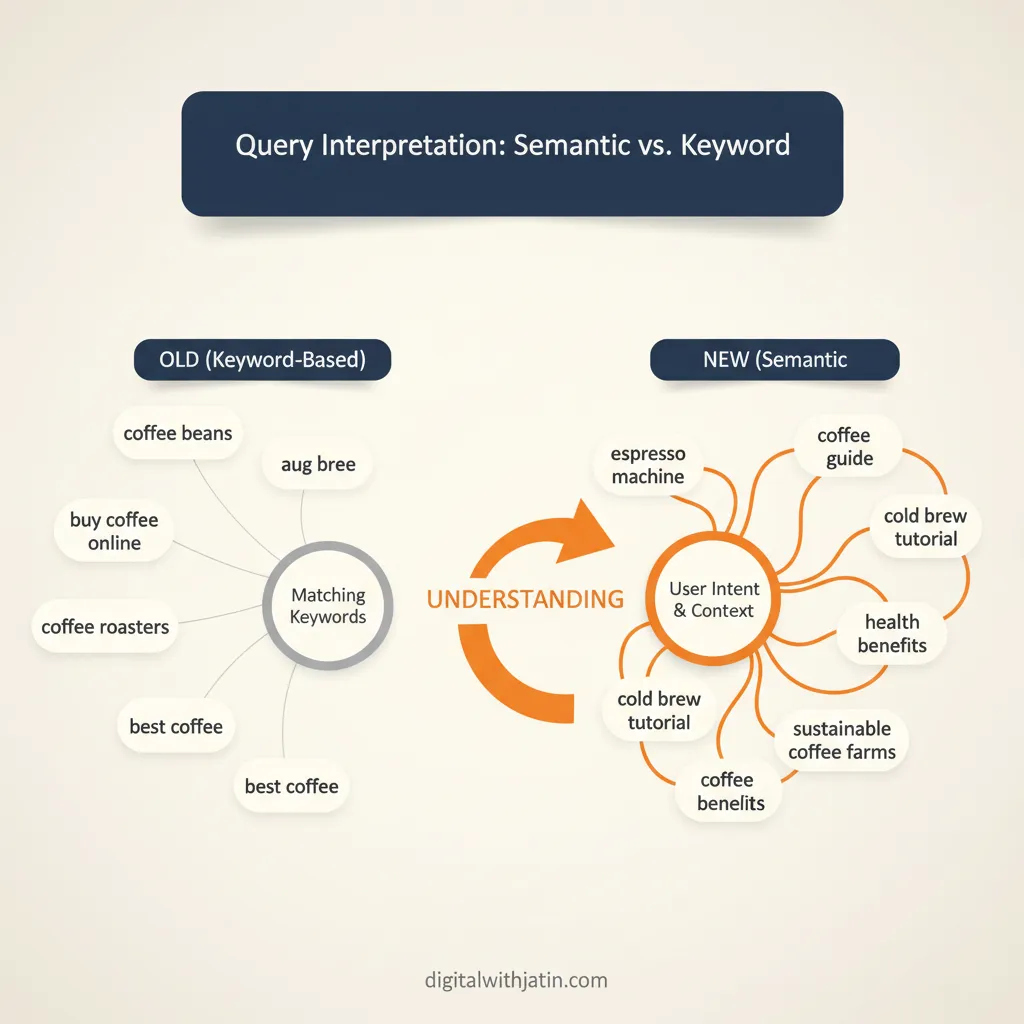
Google’s natural language understanding has been developing since BERT in 2019, but the practical consequences for keyword strategy became significant in 2024 with the AI Overview rollout. The system no longer pattern-matches a query to a keyword. It interprets intent.
A query like “do I need to submit my sitemap if my site is already indexed” gets parsed as a need for conditional technical guidance. A page that says “yes, submit your sitemap” without addressing the conditional will not surface as the best answer, even if it has strong backlinks. The specificity of the content now has to match the specificity of the query.
The arXiv paper “Generative Engines Optimization” (Aggarwal et al., 2023) documented that AI search systems favor content that directly addresses query intent over content that accumulates broad keyword coverage. That finding holds in practice.
AI chat interfaces also train users to ask full questions, not keyword strings. “How does AI change SEO for e-commerce” is now a real query pattern, not just a long-tail edge case. Keyword research has to expand to include conversational variants. Tools like Ahrefs and Semrush surface question-format queries inside their keyword explorer, so the workflow does not change much, but the targets do.
Change 2: AI Overviews Replaced Featured Snippets
This is the most visible operational shift. Google’s featured snippet, which appeared above organic results and cited one source, has been replaced by AI Overviews for most informational queries. AI Overviews synthesize multiple sources into a single answer, then cite those sources in a panel below the response.
Position one does not guarantee an AI Overview citation. A page at position five with a clean 50-word direct-answer block can earn a citation ahead of the position-one page if its passage is more directly aligned to the query. I have seen this on client accounts repeatedly since the AI Overview rollout.
What practitioners do differently now: every informational post needs a direct-answer block in the first 200 words. The block should be 40-60 words, use the focus keyword, and answer the query as if the rest of the page does not exist. That block is what the AI Overview extracts.
Change 3: Entity-Based Ranking Signals
Google’s Knowledge Graph has been operational for years, but entity-based ranking signals became a practical consideration for content strategy in 2024 as AI Overviews began using entity recognition to evaluate source trustworthiness.
Entity-based signals work like this: Google identifies the named entities in your content (people, organizations, places, concepts) and cross-references them against its Knowledge Graph. If your content correctly identifies entities and their relationships, it earns higher entity clarity scores. Those scores affect both classic ranking and AI Overview citation selection.
What this changes operationally: every post should name its entities clearly. If you are writing about a Google algorithm, name it. If you are citing a researcher, use their full name and affiliation. “A Google engineer said” earns less entity trust than “Gary Illyes, Search Advocate at Google, said.” The distinction is not just style. It is a ranking signal.
Author entity strength follows the same logic. AI search cites sources, and sources have authors. A page published under a named author with verifiable expertise, published elsewhere and cited by others, gets more citation weight than an anonymously published page with equivalent content.
Change 4: Passage Retrieval Indexes Paragraphs
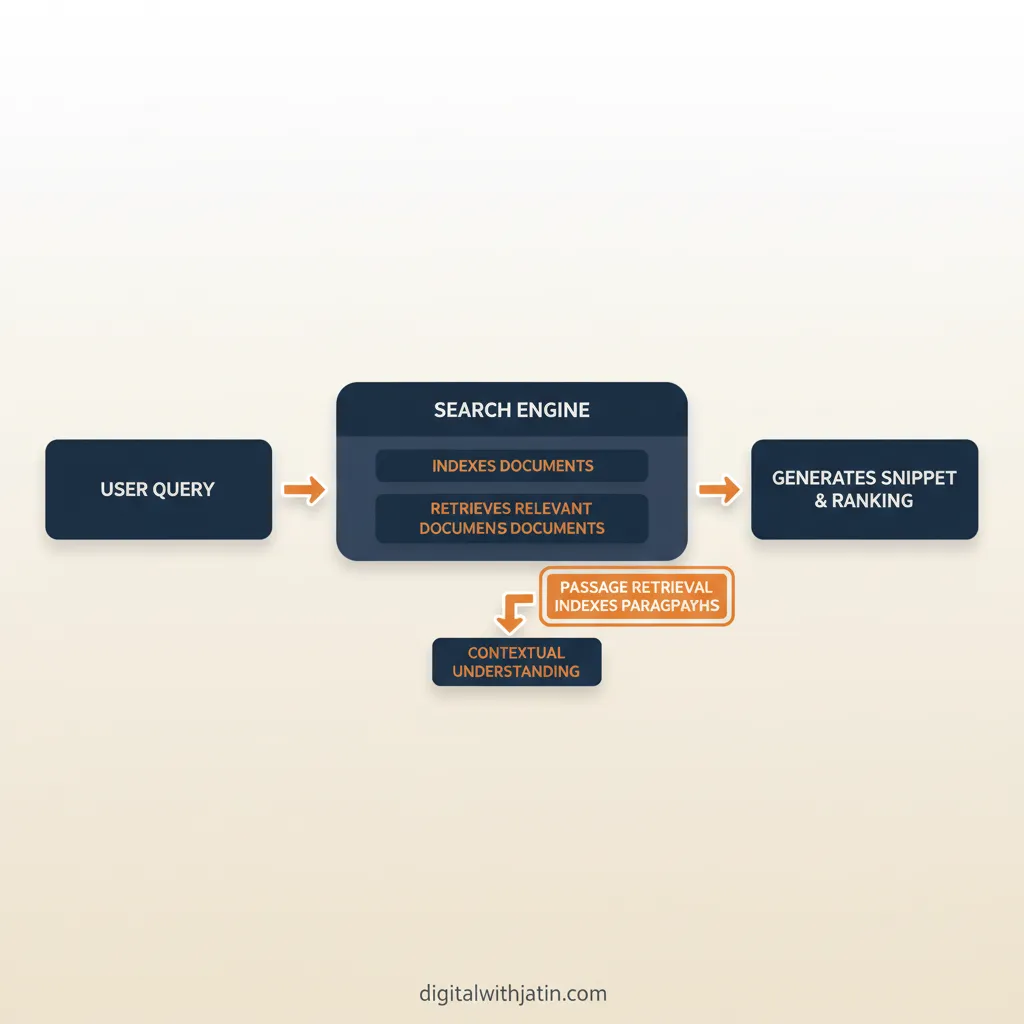
Google announced passage indexing in 2020 and rolled it out broadly by 2021, but its practical effect on content structure only became visible in 2024 as AI Overviews began pulling passages rather than full pages.
Passage retrieval means Google can rank a specific paragraph from a 3,000-word post for a query that the overall page is not the best match for. A post about “technical SEO fundamentals” that contains a well-written 150-word section on Core Web Vitals can surface for “what are core web vitals and why do they matter” even if the page is not the primary target for that query.
Stop treating page-level optimization as the only level. Each H2 section needs to stand alone as a complete answer to a sub-query. Walls of continuous text do not produce citable passages. Paragraphs of 3-4 sentences that address one question completely are what passage retrieval surfaces.
Change 5: Multi-Surface Citation
The final operational shift is the expansion from one surface (Google SERP) to at least three simultaneous surfaces: Google AI Overviews, ChatGPT web search, and Perplexity. Each has different crawlers, different robots.txt directives, and different schema preferences. A page optimized only for Google will be partially invisible to the other surfaces.
The multi-surface requirements are as follows.
Robots.txt: allow Google-Extended (AI Overviews crawler), GPTBot (ChatGPT), and PerplexityBot. Blocking any of these removes that surface’s citation potential. Check your robots.txt against the Google Search Central documentation and add explicit allow directives for each bot.
Schema: FAQPage schema is the most broadly recognized across all three surfaces. Article schema with a named author (not “admin”) is read by all three. These are not optional additions for multi-surface citation readiness. They are the floor.
Inline citations: every numeric claim needs a hyperlink to a primary source. AI search systems evaluate source attributability when selecting passages. An unsourced stat earns less citation weight than an identical stat with a link to the original study.
Five Structural Shifts: The Full Picture
The five operational changes above translate into five structural shifts in how AI is changing SEO as a discipline.
1. From domain authority to topical entity authority. Classic SEO favoured domains with many backlinks. AI SEO favours domains that have deep, consistent, named-entity coverage of a topic. A newer domain that answers 40 related questions thoroughly can outperform an older domain that answered 5 questions shallowly.
2. From keyword density to passage density. The signal has moved from how many times a keyword appears on a page to whether the page contains a passage that precisely and completely answers the query. One excellent 55-word passage outperforms 400 words of keyword-distributed prose.
3. From SERP rankings to citation share. The measurement framework needs a new column: which AI search surfaces cite this page, on which queries, with which passages. Tools like Profound, Otterly, and AthenaHQ measure this. It is additive to GSC, not a replacement.
4. From backlink volume to author entity strength. A page published under a named author with verifiable expertise gets more citation weight than an anonymously published page with equivalent content. Author schema, a consistent publishing presence, and topical depth all feed this signal.
5. From one-surface optimisation to three-surface optimisation. Google AI Overviews weight schema and direct-answer blocks. ChatGPT weights tight, entity-rich passages. Perplexity weights tables and numbered lists. A post built for all three needs structural elements that serve each surface.
What Stays the Same
Most conversations about how seo will change with ai split into two camps. One says SEO is dead. The other says nothing is changing. Both are wrong in the same way: they treat a shift in measurement as either an apocalypse or a non-event.
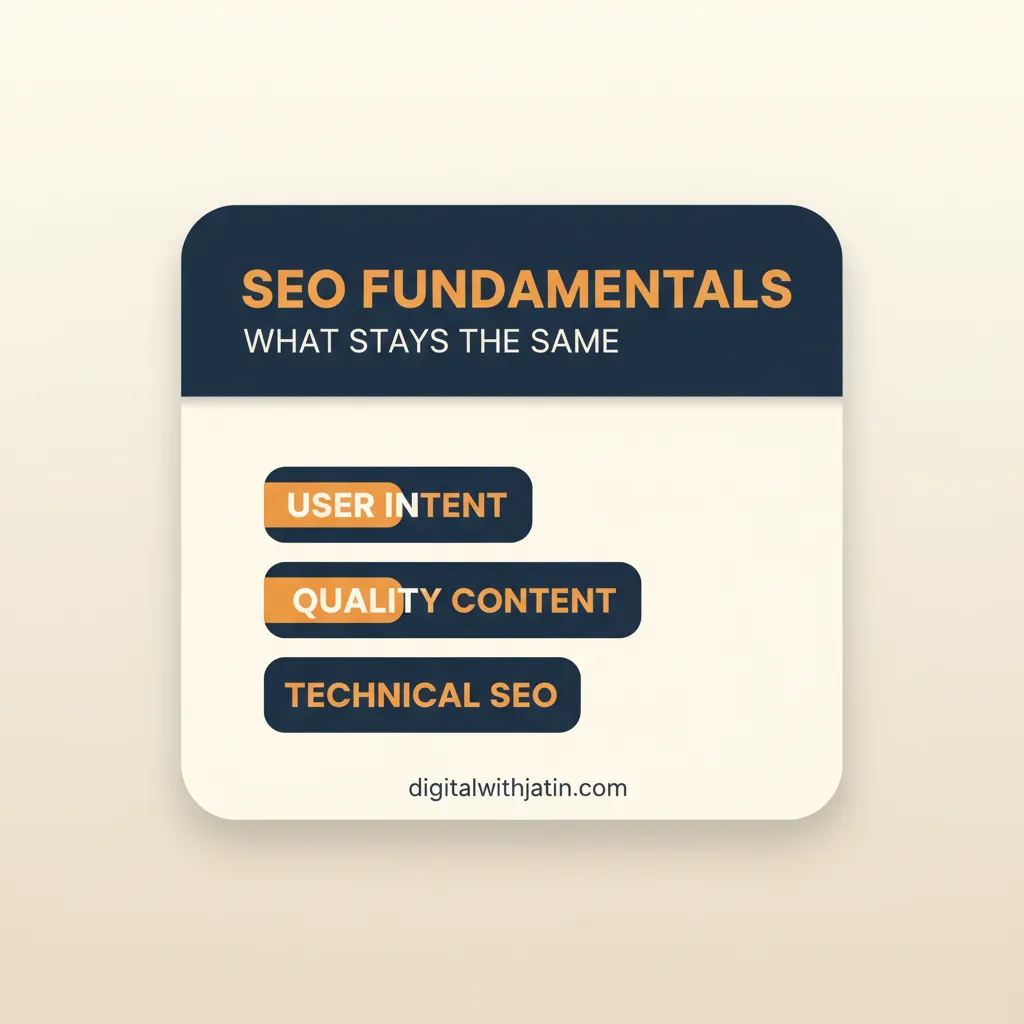
The foundation has not moved.
Technical foundations do not expire. Crawlability, indexability, Core Web Vitals, canonical tags, and clean site architecture still determine whether a page enters the index at all. AI search cannot cite a page that Googlebot cannot crawl. No citation optimization fixes a robots.txt that blocks the wrong paths.
Topical authority still determines who gets selected. A domain that has published 60 posts on technical SEO will be cited over a domain with 5. The breadth and depth of your content graph signals domain authority to AI retrieval systems the same way it signals relevance to PageRank.
Backlinks still matter. AI search systems use the same trust signals that classic search does. A highly cited page on a high-authority domain earns more retrieval weight than an equally well-written page on a new domain.
Quality over volume. Thin content that ranks because of a keyword-stuffed title does not earn AI citations. The retrieval step filters it. Publishing fewer, deeper pieces that each contain original observations, primary-source data, and clear passage structure will outperform volume plays in AI search.
What This Means for Content You Have Already Published
The shift is additive for well-built pages and subtractive for thin pages.
For pages that rank but have no AI Overview citation: add a direct-answer block in the first H2, attach FAQPage schema if the page contains Q&A content, and verify that GPTBot and ClaudeBot are not blocked in robots.txt. These are the three most common reasons a ranking page does not get cited.
For thin pages (under 800 words, no original experience, no citations): the AI search shift is the forcing function to either expand them or consolidate them. A thin page that does not rank and does not get cited serves no function.
For new pages: build the direct-answer block first. Write the 50-word definition or answer that would appear in an AI Overview. Then build the rest of the post around it. The passage-first approach produces content that performs in both surfaces.
Skills to Build Now
Prompt engineering for SEO workflows. Not writing prompts for content mills. Building reproducible prompts for content brief generation, FAQ drafting, entity extraction, and internal-link auditing. This replaces hours of manual work without replacing the thinking behind it.
Structured data beyond basics. Article and FAQPage schema are table stakes. The next level is Organization schema for entity clarity, HowTo schema where appropriate, and understanding how JSON-LD placement affects which blocks get parsed first. If you have never validated a schema implementation with the Google Rich Results Test, start there.
AI visibility tracking. Add at least one platform that tracks citation share. Run it weekly. Use it to identify which pages and passages are earning citations, then write more content that mirrors those structural patterns. This is the measurement skill how seo will change with ai demands most urgently.
Reading primary research. The tactics being discussed in SEO circles in late 2026 are already in academic papers from 2024. The Aggarwal et al. GEO paper on arXiv is one starting point. Getting comfortable with research abstracts is a compounding skill.
None of these require abandoning classic SEO. They slot on top of it. A strategy that ignores classic foundations will underperform. One that treats AI search as a separate job to be done by a separate team will miss the compounding effect of the shared infrastructure.
The Measurement Layer You Are Probably Missing
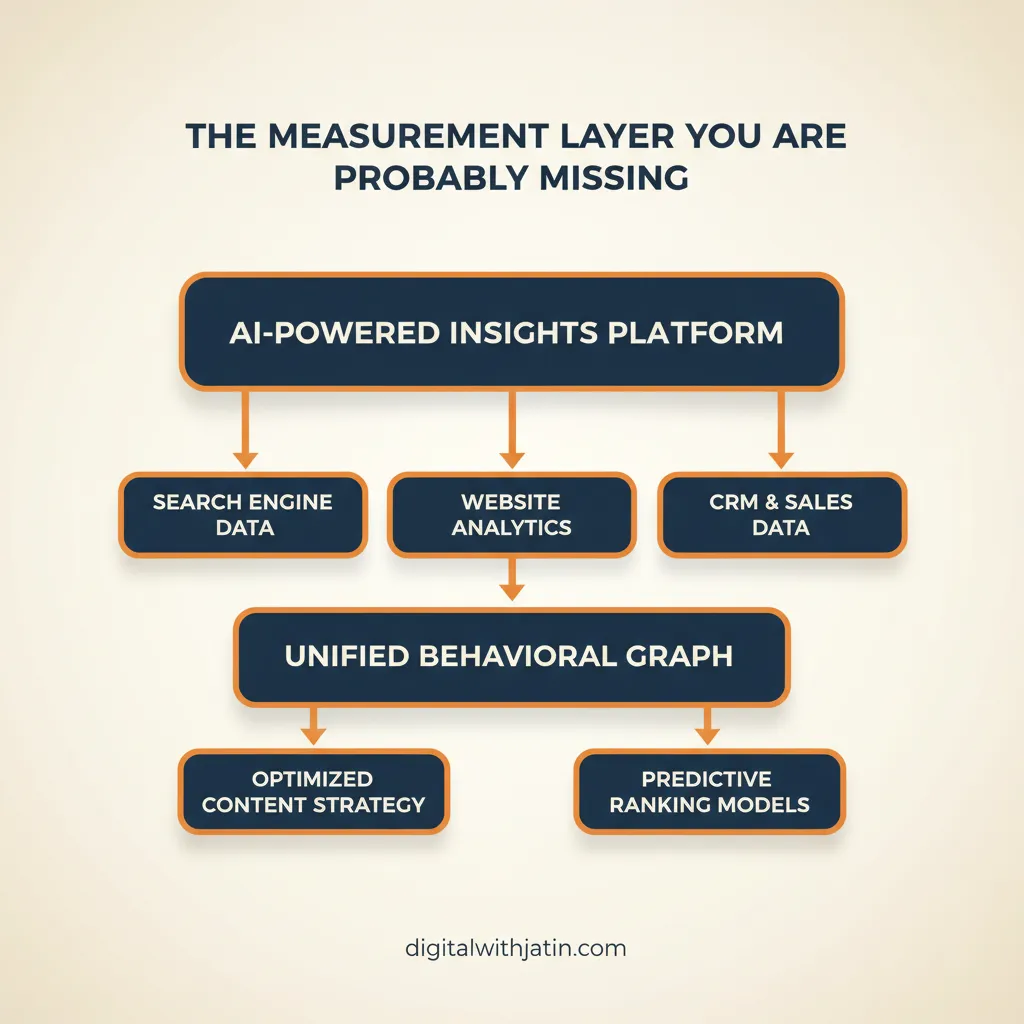
Rank trackers do not measure citation share. To know whether your strategy is working in AI search, you need a separate layer of tooling. Platforms like Profound, Otterly, and AthenaHQ (three options available as of early 2026) track which queries cite your domain across Google AI Overviews, Perplexity, and ChatGPT.
Without this feedback loop, you are optimizing blind. Adding a visibility tracker alongside Search Console is the most important infrastructure change for anyone serious about how is ai changing seo in practice. The feedback cycle is also faster: AI citation trackers run queries daily, so you can see within a week whether a rewritten passage earns a citation on a target query.
The brands winning in AI search right now are not running a different content strategy. They are running the same strategy with passage-level precision added on top, and they are measuring both organic rank and citation share. That is the complete picture.
The 40% traffic drop I mentioned at the start was recovered in about three months. Not by chasing a higher ranking (the ranking was already fine) but by rewriting the page’s first 200 words to include a direct-answer block, adding FAQPage schema, and getting the page cited in the AI Overview. Same domain authority. Same backlinks. Different passage structure. Different outcome.
To apply this to your specific content library, AI SEO consulting is where to start.