The question of how to show up in AI Overviews SEO has a concrete answer that does not depend on domain age or backlink count.
A page I published on a six-month-old domain appeared in an AI Overview for a competitive informational query within three weeks of going live. The domain had zero referring domains on that page. Three older, higher-authority competitors were ranking above it in the classic SERP, and not getting cited in the AI Overview.
The page had one thing the others didn’t: a 54-word direct-answer block under the first H2, attached FAQPage schema, and a primary-source citation for every number in the post. I’m Jatin Lokwani, an AI SEO consultant based in Ahmedabad, and as of May 2026 that pattern holds across every AI search surface I’ve tested.
Here is how to replicate it.
How to show up in AI Overviews: the SEO inputs that matter
There are five inputs the AI Overview citation process evaluates. Get all five right and you are in the eligible pool. Miss two or more and you are not, regardless of your domain authority.
1. Rank in the top 10 first
Per Google’s AI Overviews announcement, AI Overviews are generated on top of the same crawl and index infrastructure as classic search. Pages not ranking in the top 10 for a query are almost never cited in the corresponding AI Overview.
This means classic SEO fundamentals are not optional. Crawlability, indexability, internal linking, topical authority, and page relevance to the query are the gating conditions. AI Overview optimisation is a layer on top of classic ranking, not a replacement.
2. Write a direct-answer block under the first H2
The most consistent structural signal across AI-cited pages is a 50-60 word direct-answer block placed immediately after the first H2 heading. This passage answers the exact question the page targets, in plain prose, with no assumed context.
Example for a page on “what is an AI Overview”:
“An AI Overview is a synthesised answer generated by Google that appears above the classic SERP for certain queries. It draws passages from indexed web pages, cites the sources, and aims to answer the query directly without requiring a click. AI Overviews launched globally in May 2024 and are most common on informational queries.”
That passage works as a citation unit. It is self-contained, attributed in time, and answers the exact query.
3. Attach Article + FAQPage schema
Two schema types increase AI Overview citation eligibility:
Article JSON-LD: Marks the page as a piece of editorial content with a named author, a publish date, and a headline. This gives AI retrieval systems structured metadata about source type and recency.
FAQPage JSON-LD: Marks your Q&A section as machine-readable question-answer pairs. AI Overviews frequently lift FAQ answers directly, especially for “People Also Ask” patterns.
Both validate with Google’s Rich Results Test. Run validation before publishing every post, a malformed schema block actively hurts citation eligibility rather than being neutral.
4. Use named entities, not pronouns
AI retrieval resolves named entities, specific people, tools, organisations, products, and places, more reliably than vague references. Compare:
- “The expert said this tool is effective.” (no entity)
- “Ahrefs’ research on AI Overview prevalence found that informational queries trigger Overviews at significantly higher rates than commercial queries.” (entity: Ahrefs; finding: named; source URL: present)
The second version is citable because every term in it resolves: AI systems can match “Ahrefs” to a known entity, verify the claim against the linked source, and extract the passage independently. Named entities give AI retrieval a stable anchor for passage extraction that pronoun-based writing never provides.
5. Cite a primary source for every number
Every statistic, percentage, or study reference without a primary-source URL is a liability. AI search surfaces give preference to content that demonstrates verification. An inline link to a Google Search Central blog post, an industry study like the Ahrefs AI Overviews research, or an academic reference signals that the claim has been checked.
The format: stat or claim, then source in parentheses or as an inline hyperlink. No naked stats.
What to fix on pages that already rank but don’t get cited
Run this five-point check on your top pages:
- Preflight check. Search the exact query in Google. Is your page in the top 10? If not, citation optimisation is premature, fix ranking first.
- Direct-answer block. Does the page have a 50-60 word standalone answer under the first H2? If not, write one and publish.
- Schema check. Run the URL through Google’s Rich Results Test. Is Article schema valid? Is FAQPage schema valid if the page has Q&A content? Fix any errors.
- Entity audit. Ctrl+F for “the tool,” “the expert,” “they,” “it.” Replace with specific names and links.
- Citation audit. Find every number or study reference in the body. Does each have a source URL? Add links to any that don’t.
These five changes take two to four hours on a typical post. In one case, adding FAQPage schema and a direct-answer block to a page already ranking in the top 5 produced an AI Overview citation within 11 days. The citation impact is usually visible within two to four weeks for pages that already rank.
The crawlers you must allow
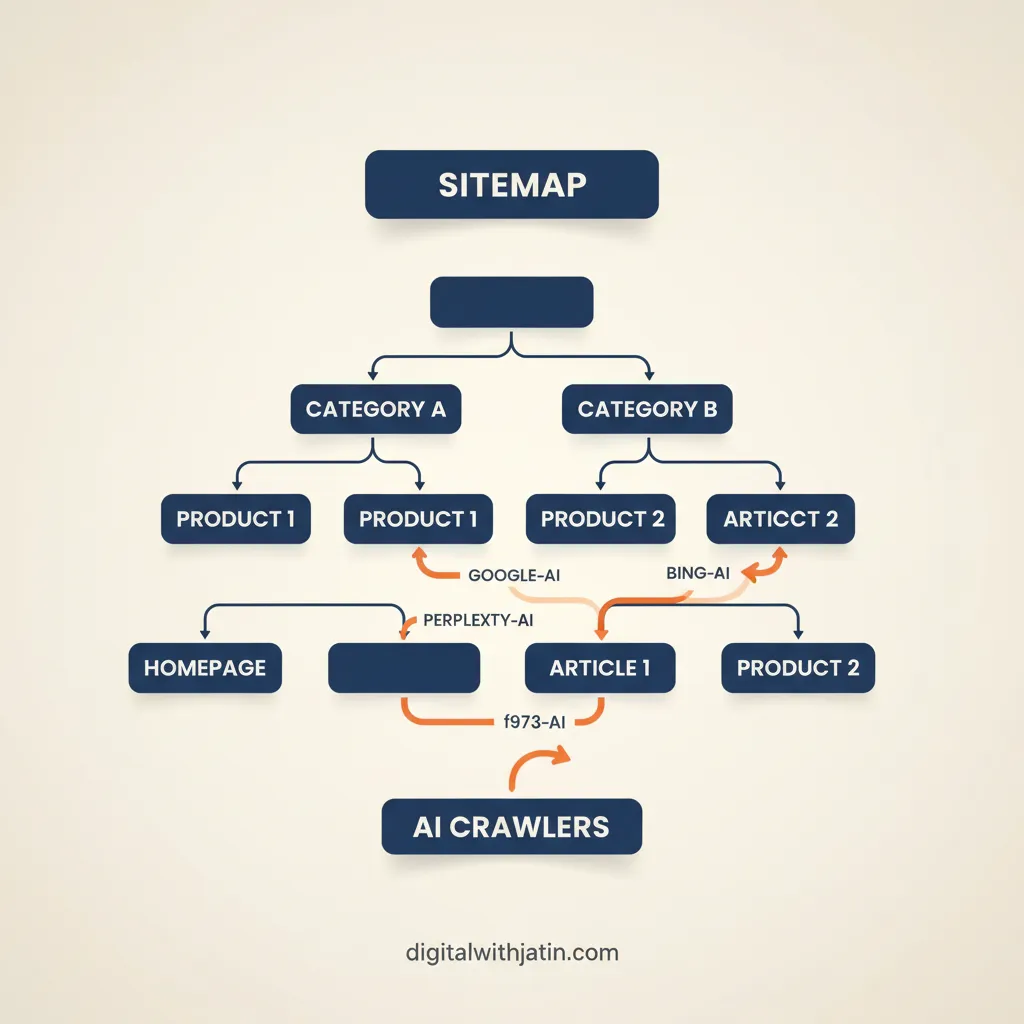
If your robots.txt blocks any of the following crawlers, your page is invisible to the corresponding AI search surface:
GooglebotandGoogle-Extended: Google AI Overviews and Gemini trainingGPTBot: ChatGPT search and browsingClaudeBot: Claude and Anthropic’s indexPerplexityBot: Perplexity search
Most sites allow Googlebot by default. Many still block GPTBot and ClaudeBot from pre-2024 robots.txt rules. Google’s robots.txt documentation covers the correct syntax. Check and open them.
For the full 12-tactic system that this AI Overviews step is part of, see the AI SEO playbook. For the platform-level differences between AI Overviews, ChatGPT search, and Perplexity, the how is AI changing SEO post covers the structural differences.
The five inputs above are the complete answer to how to show up in AI Overviews SEO: rank first, add a direct-answer block, attach FAQPage and Article schema, use named entities, and cite every number. Want this applied to your top-10 pages with a citation audit and structured data implementation? AI SEO consulting is where that work starts.