- AI SEO goes by four names: AI SEO, GEO (Generative Engine Optimization), AEO (Answer Engine Optimization), and citation engineering.
- GEO was coined in a 2023 arXiv paper. AEO predates AI Overviews and originally meant optimizing for featured snippets and voice search.
- The terms differ in scope and emphasis, not in the underlying technical work required.
- I use 'AI SEO' as the umbrella term because it is the one most practitioners and clients search for.
What is ai seo called depends on who you ask, and there are at least three legitimate answers. In a client intake call last quarter, the marketing lead asked me: “Is this GEO, or AEO, or is it just SEO with AI tools?” She had been reading different blogs, and each one used a different name for what appeared to be the same thing. It was a fair question. The field has a terminology problem.
There are now four terms in active use for roughly the same category of work. Each has a distinct origin, a slightly different emphasis, and a different audience that prefers it. Here is how they map to each other and which one I use day-to-day.
What Is AI SEO Called: The Direct Answer
AI SEO goes by four names: AI SEO (the broadest umbrella term), GEO (Generative Engine Optimization, coined in a 2023 arXiv paper), AEO (Answer Engine Optimization, a term that predates AI Overviews), and citation engineering (the specific practice of structuring content to earn AI citations). They refer to overlapping bodies of work. The differences are in emphasis, not in the technical requirements.
AI SEO: The Umbrella Term
AI SEO is the widest term. It covers using AI tools in SEO workflows (Claude for briefs, Screaming Frog with AI analysis for audits) and optimizing content to perform in AI-powered search surfaces (Google AI Overviews, ChatGPT, Perplexity).
The term is vague enough to mean different things to different people. An agency might call itself an AI SEO agency because it uses ChatGPT to write meta descriptions. A practitioner might use the same term to mean building full citation-tracking systems for generative search. Both uses are technically correct. That ambiguity is the term’s main weakness.
I use AI SEO as the primary label because it is the search query most clients and practitioners use. The keyword data supports it. When someone is looking for what to do about AI Overviews eating their traffic, they search “AI SEO” before they search “GEO.” For an index of what this category of work covers, the AI SEO guide is the starting point.
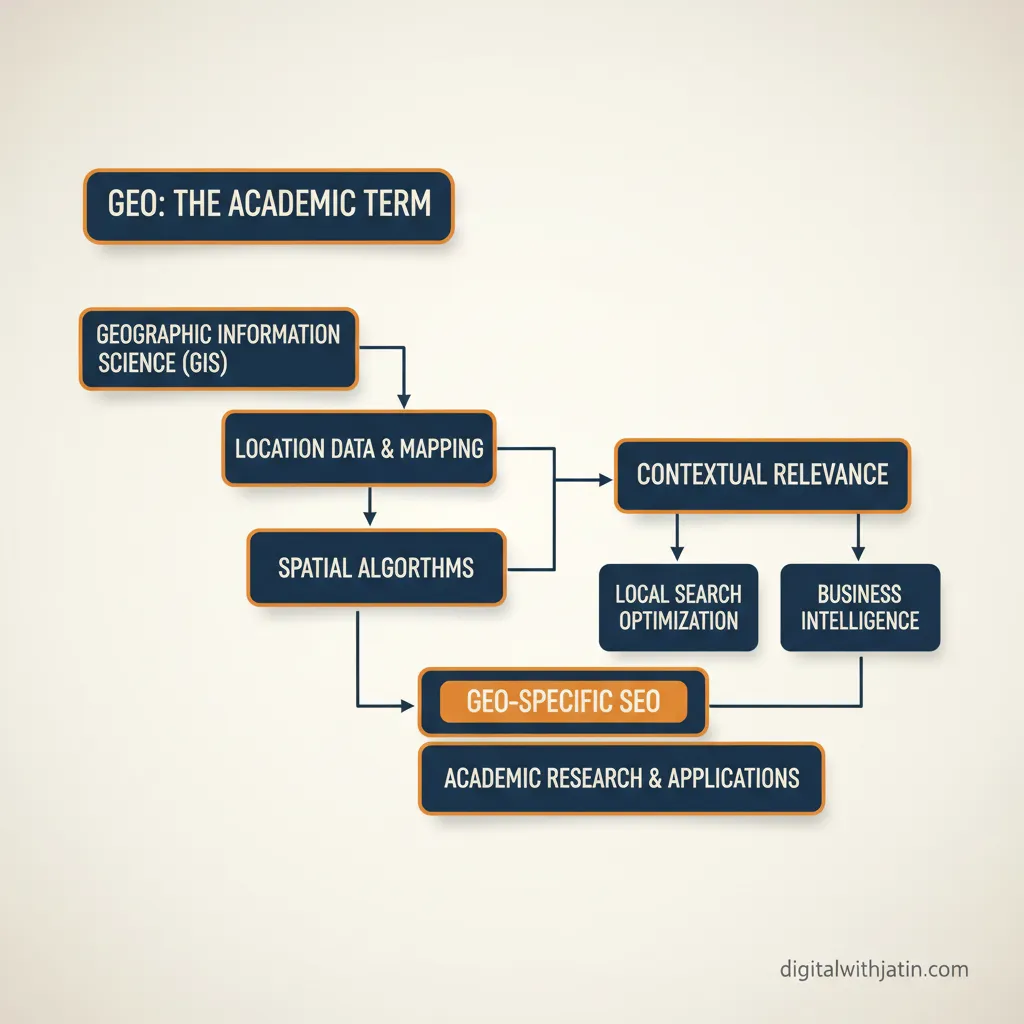
GEO: The Academic Term
GEO stands for Generative Engine Optimization. The term was defined in a 2023 arXiv paper, “GEO: Generative Engine Optimization” by Aggarwal et al., which is the first rigorous academic treatment of optimizing content for AI-generated search responses.
The paper tested eight content optimization strategies across 10,000 search queries and measured which changes increased citation frequency in AI-generated answers. The strategies that worked: adding statistics with citations, adding quotations from recognized authorities, using fluent and readable prose, and adding relevant keywords. The strategies with minimal effect: adding simplification or persuasion elements.
GEO as a term is most commonly used in academic and research contexts, and among practitioners who want to signal familiarity with the research foundation. It is precise. It is also less commonly searched than AI SEO or AEO, which affects how useful it is as a keyword target.
If you are writing content for an audience of SEO practitioners who read arXiv, use GEO. If you are talking to a D2C brand owner who wants to show up in ChatGPT, use AI SEO.
AEO: The Pre-AI Term That Expanded
AEO stands for Answer Engine Optimization. It predates AI Overviews by several years. The term originally referred to optimizing content for Google’s featured snippets (the zero-position answer boxes) and voice search assistants like Amazon Alexa and Google Assistant.
The core idea was the same then as it is now: write content that answers a specific question so directly that a machine can extract it and present it without the user clicking through. The technical requirements were the same too: concise answer blocks, FAQPage schema, question-format headings.
Since the AI Overview rollout in 2024, AEO has expanded to cover optimization for AI chat interfaces. The term now overlaps almost entirely with GEO. The main difference is historical audience. Practitioners who were doing AEO in 2022 to capture featured snippets adopted the same techniques for AI Overviews without needing to change their terminology.
If you are working with a team that already has an AEO process, you likely have most of the foundation for GEO already in place. The how SEO will change with AI post covers where AEO and classic SEO converge and where they diverge.
Citation Engineering: The Most Specific Term
Citation engineering is the narrowest of the four terms. It refers specifically to structuring content so that AI search systems select it as a cited source. It is not about ranking. It is not about traffic. It is about passage structure.
The citation engineering checklist is concrete:
- A 40-60 word direct-answer block in the first 200 words of the page
- FAQPage JSON-LD schema with question-and-answer pairs that match the body text
- Every numeric claim linked to a primary source (study, government data, official documentation)
- Named entities (full names, affiliations) rather than vague references
- Article schema with a named author, not a generic byline
- A clean heading hierarchy (one H1, logical H2/H3 nesting, no skipped levels)
Citation engineering is useful as a term when talking to technical audiences or in internal workflow documentation. It is too specific to use as a client-facing category name, because most clients are asking about visibility in AI search broadly, not about the passage-level mechanics.
For a practical implementation of citation engineering steps, the how to get into Google AI Overview post walks through each element.
Which Term to Use and When
The choice depends on who you are talking to, not on which term is technically most accurate.
Use AI SEO when talking to clients, when writing for a general marketing audience, or when targeting search queries. It has the highest search volume and the lowest barrier to recognition.
Use GEO when writing for practitioner audiences, in research-adjacent content, or when you want to signal that you understand the academic foundation of the field. Cite the arXiv paper. It earns credibility with technical readers.
Use AEO when talking to teams that were already doing featured snippet optimization before 2024. They understand the concept and the term does not require a definition.
Use citation engineering in technical documentation, workflow guides, and internal briefs where precision matters more than audience recognition.
Why the Terminology Fragmentation Happened
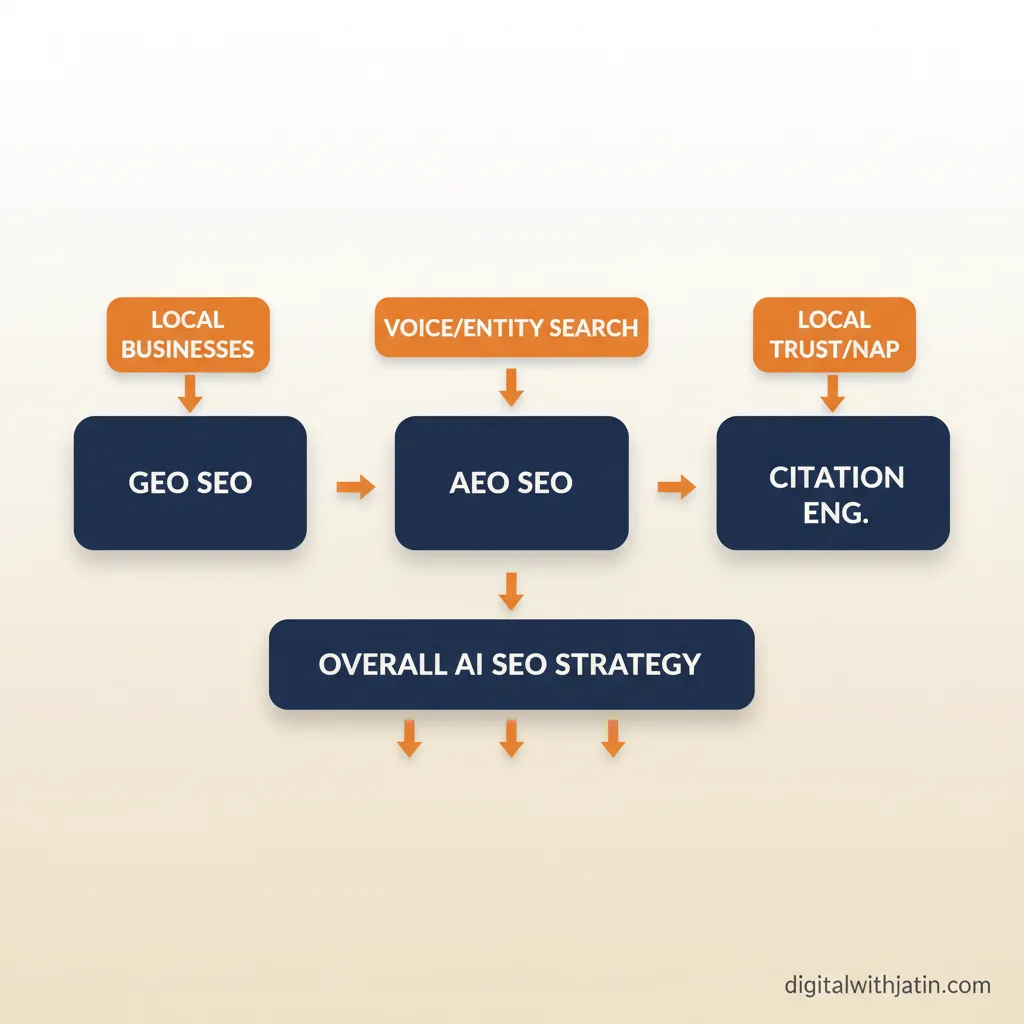
The fragmentation happened because different communities named the same problem at different times. Academic researchers named it GEO. Featured-snippet practitioners extended their existing AEO label. Marketing generalists settled on AI SEO. Technical content strategists coined citation engineering to describe the specific passage-level work.
None of these communities were wrong. The problem is that the same body of work now has four names, which creates confusion for anyone trying to hire for it, write about it, or build a practice around it.
The underlying requirements do not change based on which term you use. The top AI tools for SEO post covers the platforms that measure citation share, regardless of whether you call it GEO, AEO, or AI SEO tracking.
FAQ
What is AI SEO called?
AI SEO goes by several names: AI SEO (the broadest umbrella), GEO (Generative Engine Optimization, from a 2023 arXiv paper), AEO (Answer Engine Optimization, covering featured snippets, voice, and AI chat), and citation engineering (structuring content to be cited by AI systems).
What does GEO stand for in SEO?
GEO stands for Generative Engine Optimization. The term was coined in the arXiv paper by Aggarwal et al. (2023). It refers to optimizing content so that generative AI search systems, such as Google AI Overviews, ChatGPT, and Perplexity, cite your content in their generated responses.
What is AEO in SEO?
AEO stands for Answer Engine Optimization. It originally referred to optimizing for Google’s featured snippets and voice search. Since 2024, it has expanded to include AI chat interfaces. AEO and GEO now overlap significantly in practice.
What is citation engineering?
Citation engineering is the practice of structuring content so that AI search systems select it as a source. It includes writing direct-answer blocks, adding FAQPage schema, citing primary sources inline, and naming entities clearly. It is a narrower term than GEO or AEO, focused on passage-level mechanics.
Which term should I use: AI SEO, GEO, or AEO?
Use whichever term your audience uses. Clients searching “AI SEO agency” should see AI SEO in your copy. Academic audiences use GEO. Practitioners who were doing AEO before 2024 tend to stick with AEO. The underlying technical work is the same regardless of the label.
Is GEO the same as SEO?
GEO is a subset of SEO, not a replacement. GEO adds a citation layer on top of classic SEO. The classic foundation still drives which pages enter the AI retrieval pool. GEO determines which of those pages get cited in AI-generated answers.
The marketing lead I mentioned at the start settled on “AI SEO” for client communications and “GEO” for her internal documentation. That is a reasonable split. The terminology you use does not change what you build. It just determines who understands you quickly.
If you want the same clarity on what the actual implementation looks like on a live site, my AI SEO service starts with a citation readiness audit and builds from there.