- AI SEO adds a citation layer on top of classic SEO. The goal is to rank in standard results AND be cited inside AI Overviews, ChatGPT, and Perplexity.
- The 6-step workflow: audit citation readiness, pick the right query types, build passage structure, add schema, build topical cluster, track citation share.
- Run steps 1 through 4 on existing pages before publishing new content. Most sites are missing the citation layer, not the rank.
- Step 6: citation share tracking: is where most teams fall short. Without it, the first five steps are invisible in your reporting.
Understanding how to do ai seo requires separating the tactical layer from the structural layer. When I audited the first client site specifically for AI citation readiness, I ran the same checklist I would use for any technical SEO audit, then added four new items: Google-Extended access, direct-answer blocks in the first 200 words, FAQPage schema, and inline primary-source citations. Every item on the first list passed. Every item on the new list failed.
The site ranked well. It was crawlable, had solid schema, and had built topical authority over two years. It was simply missing the specific passage-level signals that AI Overviews use to select cited sources. Adding those signals took a week of structured work. Citation share appeared in reporting within 6 weeks.
That is how to do AI SEO in practice. Not a rebuild. An addition.
How to Do AI SEO: The Direct Answer
AI SEO is the practice of optimizing content to rank in standard search results and be cited inside AI-generated answer surfaces (Google AI Overviews, ChatGPT search, Perplexity). The 6-step workflow is: audit citation readiness, pick the right query types, build passage structure, add the schema layer, build the topical cluster, and track citation share. Run steps 1 through 4 on existing content first. Most sites are not missing rank. They are missing the passage-level signals that make content citable.
Step 1: Audit for Citation Readiness
Before producing new content, understand the current state of your existing pages.
The citation readiness audit covers four checkpoints:
Access. Open robots.txt. Confirm that Google-Extended is not blocked by a Disallow rule or a wildcard bot rule. If it is, fix this before anything else.
Direct-answer blocks. Open your top 10 informational posts by traffic. Check whether the first 200 words contain a paragraph that directly answers the post’s primary question in 40 to 60 words. If the first 200 words are background, context, or preamble, the direct-answer block is missing.
Schema. Check whether each post has FAQPage and Article JSON-LD. Validate any existing schema with Google’s Rich Results Test. Malformed schema is non-contributing.
Author entity. Check whether Article schema includes an author name and author URL. An unnamed author or a brand name in the author field does not satisfy the named-entity requirement.
Most sites fail 2 to 3 of these four checks on existing content. The audit tells you where to start.
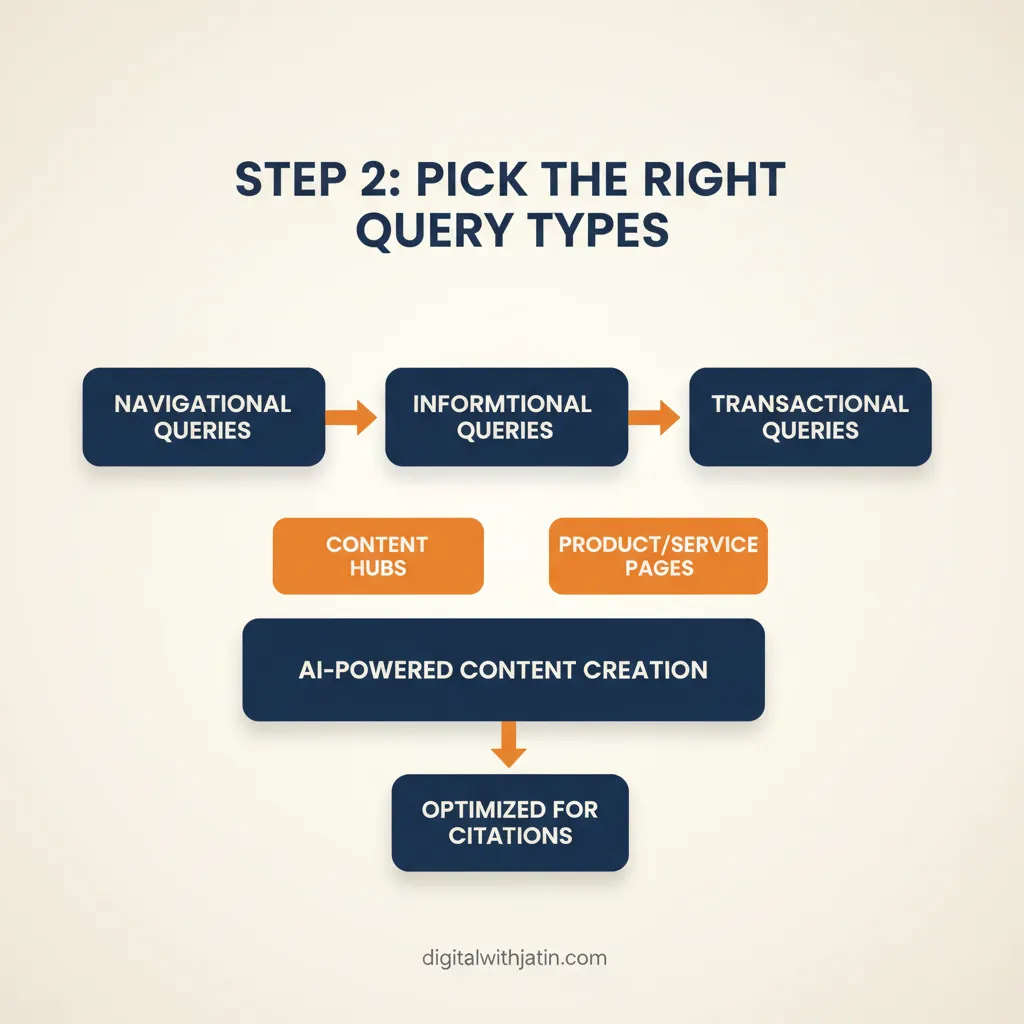
Step 2: Pick the Right Query Types
Not all queries trigger AI Overviews. Applying AI SEO optimizations to every page on a site is wasted effort on query types that are unaffected.
The query type map:
Informational queries (“how does,” “what is,” “why,” “how to”): AI Overviews appear frequently. These are the high-priority optimization targets.
Commercial queries (“best,” “top,” “review”): AI Overviews appear occasionally. Worth optimizing but not the first priority.
Transactional queries (“buy,” “price,” “near me”): AI Overviews rarely appear. Classic conversion-focused SEO applies. Time spent on AI-specific optimization here has low return.
Navigational queries (brand name searches): AI Overviews rarely appear. Brand monitoring through AI citation tools is relevant, but passage optimization is not.
Export your keyword list from Ahrefs or Google Search Console. Filter for informational intent. Those are the pages to prioritize in steps 3 and 4.
What triggers an AI Overview covers the query categorization in more detail.
Step 3: Build Passage Structure on Each Page
This is the citation-engineering layer. Three additions to every informational post:
The 50-word direct-answer block. In the first 200 words, write a paragraph that fully answers the post’s primary question. No caveats. No “it depends” without immediate resolution. No references to content that appears later. The paragraph must be a complete, context-free answer.
The test: cover the rest of the article. Does the paragraph alone give a reader a useful answer? If yes, the block is ready. If no, rewrite it.
Standalone FAQ answers. Every FAQ entry in the post body must stand alone. No pronouns that reference the article title. No “as described above.” A FAQ answer pulled into an AI response appears without any surrounding context. If it needs context to make sense, it fails.
Inline primary-source citations. Every numeric claim needs an inline link to the original research, report, or official documentation. Not a news article reporting on research. The source itself. AI systems prefer to cite pages that cite verified primary sources.
The AI SEO guide covers the full passage-engineering framework, including the specific patterns that appear most often in cited passages.
Step 4: Add the Schema Layer
Schema markup makes page elements machine-readable in a structured format that AI systems can process directly without parsing prose.
Three schema types matter for AI SEO:
FAQPage with at least 4 self-contained Q-A pairs. This is the single highest-use schema type for AI citation. Each Q-A pair is independently extractable.
Article with author.name, author.url, datePublished, and dateModified. Authorship is an E-E-A-T signal. Publication date is a freshness signal. Both matter for AI source selection.
HowTo for procedural posts with numbered steps. This schema type makes step-by-step content extractable as a structured list rather than flowing prose.
Generate the JSON-LD blocks, embed them in the page head, and validate with Google’s Rich Results Test before publishing. A malformed schema block contributes nothing.
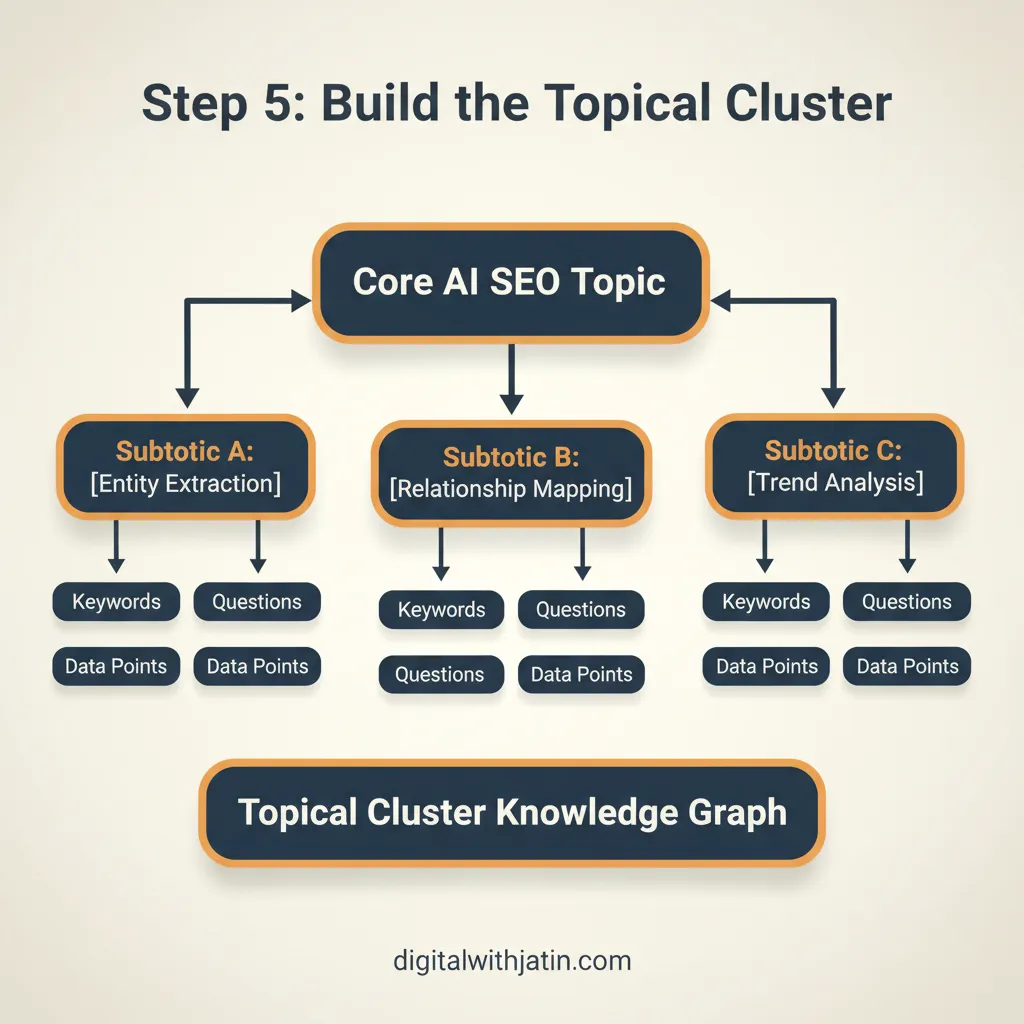
Step 5: Build the Topical Cluster
A single well-optimized page competes against sites with 10 to 15 posts on the same subject. Topical cluster depth is the signal that separates a genuine authority from a single-post optimization.
For any subject you want to win citation on, build a cluster:
- Map 8 to 12 related questions users ask about the subject.
- Write a post answering each question in depth.
- Internally link every post in the cluster to every other using anchor text that matches the linked post’s focus keyword.
- Publish one post per week or fortnight. Consistent depth over time signals authority more reliably than batch-publishing.
The cluster is not optional for sustained AI citation. A site with one well-structured post on a topic earns occasional citations. A site with 12 interlinked posts on the same topic earns consistent citations because AI systems can verify topical authority across the cluster.
Step 6: Track Citation Share Alongside Rank
This is where most AI SEO efforts fall apart. Teams run steps 1 through 5, check rank, see no change, and conclude the work did not perform. Rank is not the metric for the AI layer.
Citation share is: the proportion of relevant informational queries on which your pages appear as cited sources inside AI Overviews, ChatGPT, or Perplexity.
Tools that measure this:
Profound tracks citations across Google AI Overviews, ChatGPT, and Perplexity. It shows which queries trigger citations, which pages earn them, and how share changes over time.
Otterly focuses on Perplexity and ChatGPT monitoring with a simpler interface.
AthenaHQ adds competitive benchmarking: how your citation share compares to specific competitors on the same queries.
Run both rank tracking and citation tracking in parallel. On informational queries, both metrics matter. Rank tells you where you appear in classic results. Citation share tells you whether you appear in the AI layer. A site that ranks position 3 and earns consistent AI citations is in a stronger position than a site that ranks position 1 with no citation presence.
What the Full Workflow Produces
Over 60 to 90 days of running this workflow:
Pages become eligible for AI citation (the access and structure issues are fixed). Citation share appears on queries where your pages were previously invisible in the AI layer. Branded search stabilises even on queries where generic CTR drops, because AI Overview citations drive brand recognition without a click.
The sequence matters. Technical readiness first (steps 1 and 4). Passage structure next (step 3). Cluster depth over time (step 5). Measurement from day one (step 6).
Every post in this cluster implements the same workflow. The AI SEO strategy overview, the passage optimization guide, and the AI SEO tools breakdown each go deeper on individual steps. For implementation on your specific site, the AI SEO service is where the full six-step workflow gets built end-to-end.
FAQ
What is AI SEO and how is it different from regular SEO?
AI SEO is the practice of optimizing content to rank in standard search results AND be cited inside AI-generated answer surfaces like Google AI Overviews, ChatGPT, and Perplexity. Classic SEO optimizes for rank position. AI SEO adds a citation layer that requires specific passage structure, schema markup, named author entities, and primary-source citations. The technical foundation is shared. The citation layer is the addition.
How do I start doing AI SEO on an existing site?
Start with the citation readiness audit: check robots.txt for Google-Extended access, scan your top informational posts for direct-answer blocks in the first 200 words, verify FAQPage and Article schema are present on each, and confirm a named author with a URL appears in the schema. Most sites are missing 2 to 3 of these signals. Fix those before publishing new content.
How long does AI SEO take to show results?
The technical and structural changes can be implemented in days. Citation results typically appear 4 to 12 weeks after implementation as Google re-indexes updated pages and begins pulling passages for AI Overviews. Topical cluster depth takes longer: building a 10-post cluster over 2 to 3 months is the standard timeline for sustained citation authority.
Do I need separate tools for AI SEO vs classic SEO?
Yes, for the measurement layer. Classic SEO tools: Ahrefs, Semrush, Google Search Console: do not track AI Overview citations. Profound, Otterly, and AthenaHQ are the tools built specifically for that measurement. For content production and technical work, the same tools you use for classic SEO handle most of the AI SEO workflow.
What is the most important AI SEO signal to fix first?
If Google-Extended is blocked in your robots.txt, fix that first. A blocked crawler makes every other optimization irrelevant. After confirming access, the next highest-use change is adding a 50-word standalone direct-answer block in the first 200 words of each informational post. That single addition is the most commonly missing citation signal across sites that otherwise have solid SEO foundations.